Puppy Biting: Why It Happens and How to Stop It

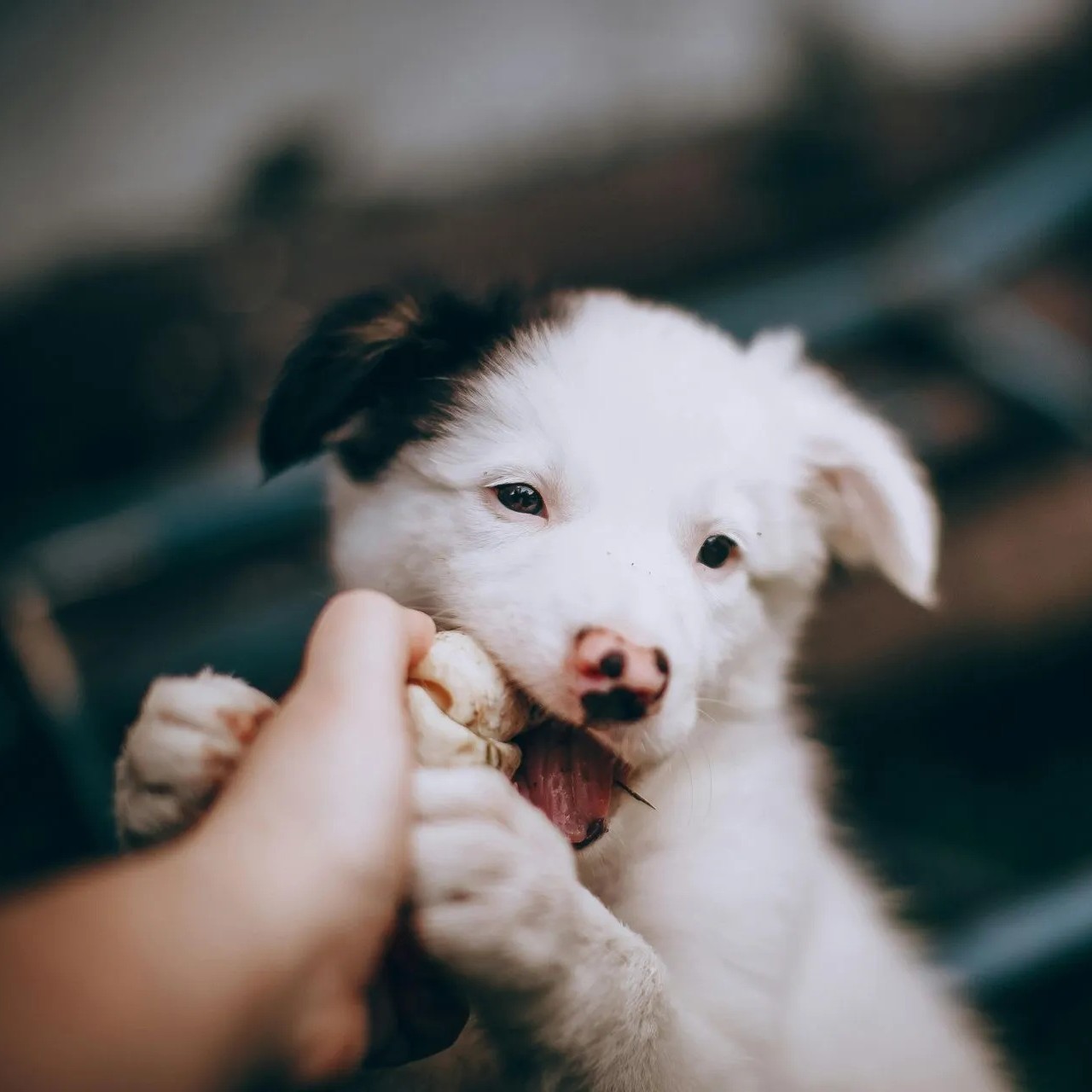
If you’ve recently brought home a puppy, you’ve probably discovered one thing very quickly: puppies love to bite. Hands, ankles, sleeves, shoelaces, furniture — nothing seems off limits.

While puppy biting can feel frustrating (and painful), it’s actually a normal part of canine development. The key is teaching your puppy what is acceptable to bite and how to interact with people appropriately from an early age.

At Rich’s Elite Dog Training, we help owners understand the difference between normal puppy behavior and habits that can become long-term behavioral problems. With the right structure, consistency and training, puppy biting can be corrected before it escalates into dangerous or uncontrollable behavior.

Why Do Puppies Bite?

Puppies explore the world with their mouths. Biting and mouthing are natural behaviors tied to play, teething and social development. According to the American Kennel Club, puppy biting is especially common during teething and early socialization stages.

Some common reasons puppies bite include:

  • Teething discomfort
  • Excitement during play
  • Lack of impulse control
  • Overstimulation or overtiredness
  • Attention-seeking behavior
  • Learning bite inhibition

In litter settings, puppies naturally learn bite inhibition from one another. If one puppy bites too hard, the other stops playing. Over time, they learn to soften their mouths. Your job as the owner is to continue teaching those same boundaries in the home.

When Puppy Biting Becomes a Problem

Normal puppy mouthing should gradually improve with age and training. However, many owners accidentally reinforce biting behaviors without realizing it.

Common mistakes include:

  • Wrestling with puppies using hands
  • Allowing “cute” biting early on
  • Inconsistent corrections
  • Encouraging chase games
  • Failing to provide structure or boundaries

What starts as playful nipping in a small puppy can quickly become dangerous as the dog grows larger and stronger.

If your puppy:

  • Bites hard enough to break skin
  • Becomes difficult to redirect
  • Lunges at ankles or clothing
  • Shows signs of guarding or aggression
  • Continues intense biting beyond the teething phase

…it’s time to address the behavior immediately with professional guidance.

How to Stop Puppy Biting

1. Redirect to Appropriate Toys

When your puppy begins biting hands or clothing, calmly redirect them to a chew toy or tug toy instead. Puppies need an outlet for chewing and teething, so having appropriate toys available at all times is important.

The goal is simple:

  • Toys are for biting
  • People are not

Consistency matters. Every member of the household should follow the same rules.

2. Stop Play Immediately

Puppies learn quickly when biting causes fun to end.

If your puppy bites:

  1. Calmly stop interaction
  2. Stand up or walk away
  3. Remove attention for 20–30 seconds
  4. Resume calmly once the puppy settles

This teaches your puppy that rough behavior makes play disappear. Trainers and experienced owners commonly refer to this as a “reverse timeout.”

3. Avoid Overstimulation

Many biting episodes happen because puppies become overtired or overstimulated. Just like overtired children, puppies often lose impulse control when they need rest.

Signs your puppy may need downtime:

  • Zooming around uncontrollably
  • Ignoring commands
  • Intensified biting
  • Barking or frantic behavior

4. Reward Calm Behavior

One of the biggest mistakes owners make is focusing only on correcting bad behavior instead of rewarding good behavior.

Whenever your puppy:

  • Greets calmly
  • Plays gently
  • Chews appropriate toys
  • Responds to commands

…offer praise, affection or rewards immediately. Dogs repeat behaviors that consistently produce positive outcomes.

Why Early Training Matters

Puppyhood is the most important developmental stage of your dog’s life. Behaviors learned early often carry into adulthood.

Professional puppy training helps:

  • Build impulse control
  • Improve focus and obedience
  • Establish household boundaries
  • Prevent future aggression
  • Strengthen owner communication

At Rich’s Elite Dog Training, training is tailored specifically to your dog’s personality, breed tendencies and family lifestyle — not a one-size-fits-all approach. Early structure and leadership create calmer, more confident dogs that understand how to behave appropriately in any environment.

The Biggest Takeaway

Puppy biting is normal — but allowing it to continue unchecked is not.

The earlier you teach boundaries, impulse control and proper behavior, the easier it becomes to raise a well-mannered, confident dog. Consistency, structure and communication are the foundation of successful puppy training.

If your puppy’s biting is becoming overwhelming, professional guidance can make a huge difference before the behavior becomes deeply ingrained.

Ready to build better habits from the start? Contact us to learn more about personalized puppy training programs designed to help your dog succeed.

The Importance Of Following Breed-Specific Advice

The Importance Of Following Breed-Specific Advice

Different breeds have different personalities and respond to in-home dog training techniques in different ways. Therefore, if you are planning to buy more than one dog or if you happen to prefer having dogs of different breeds, I strongly suggest that you look for an...
read more
Basic Training Commands

Basic Training Commands

Some of the most basic and important dog obedience commands are "heel", "sit", "stay", "down", "come", and "drop it". These may seem like very simple commands, but they are more than just cute little tricks. They are actually the keys to controlling your dog’s daily...
read more
Dog Biting

Dog Biting

Amongst the most feared and dangerous dog behaviors is “Biting.” Even the most aggressive dog can be trained to improve its behavior considerably. However, To successfully deal with dog biting problems, finding out how the behavior began will be necessary. The best...

read more
Home Dog Training vs. Obedience School

Home Dog Training vs. Obedience School

What is so important about in-home dog training? Couldn’t you just send your dog to obedience school? Technically, you DO have a choice of enrolling your dog in obedience school. But, as more and more satisfied owners discover, training conducted in the home...

read more
Dog Training Tips To Stop Dog Jumping

Dog Training Tips To Stop Dog Jumping

Too often, owners are the cause of the bad behavior known as “Jumping Up.” From the puppy stage to adulthood, many puppies are allowed to jump up and be petted and loved. Then, the puppy grows into a full-sized adult that knocks you off your feet whenever it greets...

read more
Eliminate The Source Cause Of Dog Biting

Eliminate The Source Cause Of Dog Biting

Dog biting problems are simply the results arising from some other factor. By identifying and addressing that factor with patience and confidence, you can effectively eliminate the biting problems. Patience is especially needed when you are still trying to identify...

read more
Why Train Your Dog?

Why Train Your Dog?

Training is an essential part of raising puppies to become well-mannered dogs. Training a puppy doesn’t mean you’ll have to stop playing, cuddling, or spoiling them. It only means that you’ll have to spend extra time and effort in making sure that the puppy...

read more
Using Toys To Assist Training

Using Toys To Assist Training

There are lots of dog toys you can use to correct puppy behavior problems like destructive chewing. In order to prevent “boredom,” I suggest that you purchase an assortment of chew toys. If you notice your puppy starting to chew on furniture or other household items,...

read more
Elite Dog Training Logo

Mobile In-Home Dog Trainer Servicing the entire North Shore area including Deerfield, Lake Forest, Highland Park, Glencoe, Glenview, Wilmette, Winnetka, Barrington, Buffalo Grove, Hawthorn Woods, Mundelein, Vernon Hills, Libertyville, Lincolnshire, and beyond.